


Lammas/Lughnasadh (Lammas Bread Recipie included)
By Bellisana - 29/11/2025 - 0 comments
"What are we harvesting in our own lives?"
Lammas/Lughnasadh
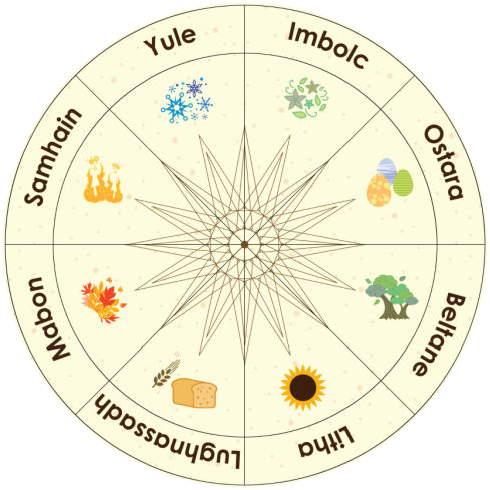
August 1st marks the beginning of the first harvest and is traditionally marked by two ancient festivals with a similar focus. Lammas/Lugnasadh is one of the four major pagan festivals. Celebrations include baking bread from the first grains of the harvest and blessing them in a church ceremony known as the "loaf mass." There is a theory that "Lammas" is a shortened form of "loaf mass."
Whether you call it Lammas or Lugnasadh, the first harvest festival on August 1st is steeped in history. Lugnasadh, a Gaelic/Celtic festival, was celebrated on the full moon closest to the midpoint between the summer solstice and autumnal equinox during the first harvest. At the same time, the August 1st date for Lammas comes from the Christian harvest festival, adapted to make it easier to convert pagans to Christianity. Understanding the historical roots of these festivals adds depth to our appreciation of them.
Their plan didn't quite work out as they intended. Pagan communities adopted the festival into their calendar and combined it with Lugnasadh. Lughnasadh, the traditional Celtic harvest celebration, originated with Lugh, described in the earliest mentions as the King of the Tuatha de Dannan, the god of all skills and patron of Blacksmiths, who held the festival to honor his foster mother, Tailtiu.
Lugh is believed to be one of a set of triplets born to the daughter of King Balor of the Fomorians. A prophecy that his grandchild would kill him caused him to lock up his daughter, and when she gave birth to triplets, two of the triplets were killed; however, Lugh was saved by the Tuatha de Dannan and raised by his foster mother, Tailtiu, an earth goddess. She died at the harvest and asked that her followers celebrate the harvest with games in her honor.
As hard as it may be to believe when it's 104, Lammas and Lugnasadh also mark the end of summer, the beginning of fall, and the last quarter of the Celtic year. Both festivals are joyous celebrations of the harvest's abundance, marked by games, contests, and a magnificent feast. In this sense, the celebrations are similar to the American Thanksgiving holiday and the Jewish Feast of Weeks, or Shavuot, evoking a sense of shared joy and plenty.
It's also the time of the year to engage in personal reflection. What are we harvesting in our own lives? Journaling is one of the best ways to keep track of our goals and focus on the goodness we want to manifest in our lives. It is also a season to discard useless thoughts and habits and form new ones to strengthen ourselves. Reflecting on these topics alone, in the privacy of your journal, allows you to stay in touch with yourself more easily and often helps you work through the questions we have about what and how to manifest the energy we want in our lives.
Stones corresponding to Lammas/Lugnasadh
- Citrine, a cleansing stone that helps dissipate negative energy and helps you stay grounded. It's a stone of abundance and prosperity.
- Aventurine enhances prosperity and career success. It aids in healing and imparts a sense of calm and balance. Aventurine also helps see possibilities and options in any situation and encourages a positive outlook.
- Malachite enhances wisdom and intellect and can bring money and success.
- Topaz enhances passion and is a symbol of prosperity and gratitude
- Carnelian helps restore vitality and reduces the fear of death. It can help reduce feelings of envy, rage, and resentment.
- Cat's Eye enhances clarity, insight, intuition, and psychic abilities. It offers protection and helps ward off evil. Cat's Eye also brings luck and fortune, symbolizing healing, rejuvenation, and spiritual enlightenment.
- Amber transforms negative energy. While not technically a "stone," its fossilized composition makes it an excellent stone for healing and detoxifying the body. As a fossil made of tree sap, Amber connects us to the earth, can turn negative energy into positive energy, and can help manifest our desires.
- Peridot enhances confidence and encourages personal growth. It can also help you move past negative patterns and behaviors and improve your protection.
- Jasper brings tranquility and encourages cooperation. It can increase determination, focus, and follow-through. Jasper is a stone of balance and harmony.
Color Correspondences
The colors of Lammas are those of fall and the harvest. Decorate your Lammas altar or table with stones and candles in these colors.
- Yellow - healing, friendship, creativity, self-esteem, intellect.
- Green - increases trust, healing and wellness, new beginnings, harmony, and money.
- Browns - earth magic, hearth and home blessing, concentration, and material success.
- Golds - money, inspiration, energy, divination, justice, and health
- Oranges - alertness, kindness, increased material worth, breaking through barriers.
Lammas Bread
Bread is the ultimate symbol of the Lammas season. After all, once the grain is harvested, it is milled and baked into bread, which is then consumed. It is the cycle of the harvest coming full circle. The spirit of the grain god lives on through us in the eating of the bread. In many traditions, a loaf of special bread is baked in the shape of a man to symbolize the god of the harvest. You can easily make a loaf of Lammas bread by using a pre-made loaf of bread dough found in the frozen food section of your grocery store. Indeed, you can make your dough, but if you're not much of a baker, this is an easy alternative.
Quick & Easy Lammas Bread
First, place the frozen dough on a greased cookie sheet.
Spray a piece of plastic wrap with non-stick cooking spray or olive oil, then place it on top of the dough.
Place the tray in a warm place, and allow the dough to rise for several hours until it has doubled.
Once the dough has risen, cut five slits in it, as shown in Figure 1.
Shape the two lower sections into legs, the side sections into arms, and the top section into a head, as shown in the photo (Figure 2).
Bake the bread for 40 minutes at about 350 degrees or until golden brown.
After baking, remove from the oven and cool on a wire rack.
Brush the bread man with melted butter, sprinkle with herbs if you like, and use it in your Lammas ritual.
Tags: Lammas/Lughnasadh with Lammas bread recipe


-250x300.jpg)
Comments
Write a comment